Prospecting in Zimbabwe
Some of my vivid memories of growing up involved exploring the bush in search of treasure
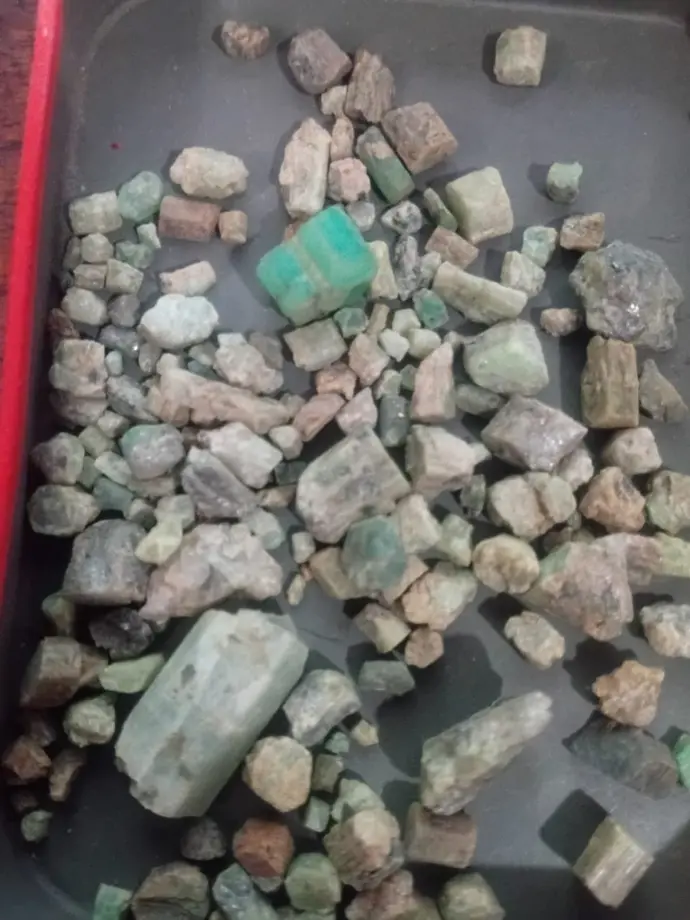
Prospecting in Rhodesia in the 1970s
During the 1970s, prospecting in what was then Rhodesia, now Zimbabwe, was not confined to large mining companies. Individual prospectors could still go into the countryside searching for gold and other minerals, continuing a tradition that had been part of the country's mining history for generations.
The legal framework was provided by the Mines and Minerals Act. A prospecting licence gave its holder the right to search for minerals on land that was legally open to prospecting. A prospector who discovered a promising mineral occurrence could, subject to the mining regulations, peg a block of claims and apply to have the mining location registered.
But before there could be a claim, there had to be the search.
For the private prospector of the 1970s this could be a remarkably physical activity. Geological maps and knowledge of previously discovered mineral belts could suggest promising country, but ultimately much depended upon going out onto the ground and looking.
Gold in Zimbabwe frequently occurs in ancient geological formations, particularly the country's greenstone belts. The prospector therefore looked for the visible signs of mineralisation: reefs and veins exposed in rock, quartz, changes in the surrounding stone, old workings and other indications that minerals might occur below the surface.
Interesting rock could be broken away with a geological hammer and examined. Samples could be collected and later submitted for assay to determine whether they contained economically interesting quantities of gold or other minerals. The mining law specifically allowed a licensed prospector to remove mineral samples for the genuine purpose of having them assayed or determining their nature.
There was therefore something wonderfully direct about prospecting.
A landscape was not simply scenery. A rocky outcrop, a change in colour, an exposed quartz vein or an abandoned working could become a clue. The prospector learned to look at the ground and ask what lay beneath it.
If a discovery appeared sufficiently promising, the next stage was to establish a claim. The expression "pegging a claim" was quite literal. Mining law specified physical pegs used to mark the boundaries of a mining location, and the position and dimensions of the claim then became part of its formal registration.
Most expeditions, of course, did not end with the discovery of a fortune.
Prospecting involved uncertainty. Samples that looked promising might prove disappointing when assayed. A mineral might certainly be present but in concentrations too low to mine economically. Finding traces of gold was quite different from finding a viable gold deposit.
Yet that uncertainty was part of its fascination.
A Personal Memory
In the 1970s I sometimes went prospecting with my father.
My memories are not principally of mining machinery or commercial mines, but of being out in the country together: examining the ground, looking at rocks and searching for the possibility that something valuable might be concealed within apparently ordinary stone.
There were evenings around the campfire. Woodsmoke hung in the cold air. Above us was the enormous African night sky.
Those expeditions eventually became part of the background to my poem For My Father.
The line:
You searched for gold
In the stone ground.
is therefore quite literal.
But the gold in the poem has become something different.
The prospecting trips themselves have disappeared into the past. What remains are fragments: autumn air, woodsmoke, a campfire, stars, a meteor crossing the darkness and my father's voice beside me.
The search through stone has become a search through memory.
And perhaps that is why the poem finally asks:
What is grief,
if not
The stir of remembered places
And you?