Last night before going to bed had a bug hunt - looked into all my sheets as well as Mr Woodcock's and all my linen, It ended in the capture of twenty-six. The ship (or at least our cabin) is swarmed with them - and there were at least ten times as many got away as what we caught. I found most in the folds of my clean sheets which I kept under the mattrass.
Rats!
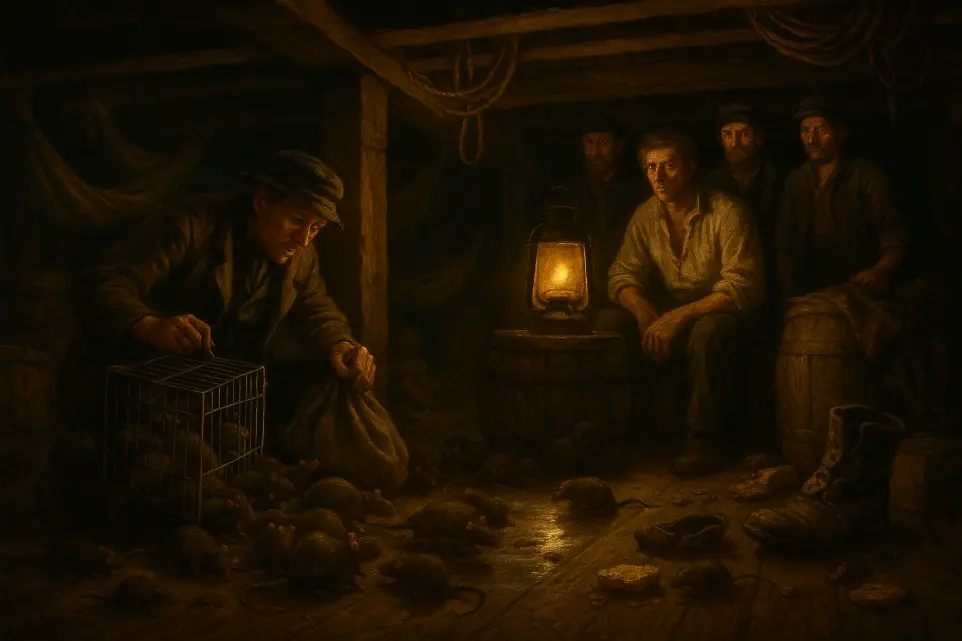
There are also hundreds of rats as well on board. Just before the ship left the docks, a man was employed to catch some of them. He caught four hundred in three days. They eat up all the things in the cabins down below though they have not yet made an appearance in ours. They ate up two pairs of the skipper's boots last night.
Monday 28th March 1864 Rain
n
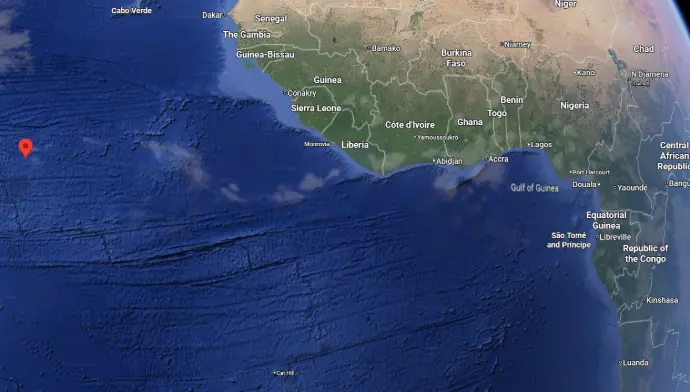
Sharp squalls today. Every hour or so rains, as you never see it rain in England - comes down in sheets, and is all over in ten minutes. Lat 5.46 S Long 30. 2W
.
Storm Tuesday 29th March 1864
There was a tremendous thunderstorm last night. The flashes of lightning are such sharp ones. At least they are not so much flashes as balls of fire, and the thunder such as you only hear in tropical climates - any thunderstorm I have ever seen before is nothing compared to it. It rained as well - the mate says each drop is a bucketful.
I stripped and walked about on deck - it was a splendid shower-bath - it was about twelve o'clock last night. During the flashes you might, I believe, have seen a cork on the water a mile off; it rained so hard that it almost took my breath away

4th April
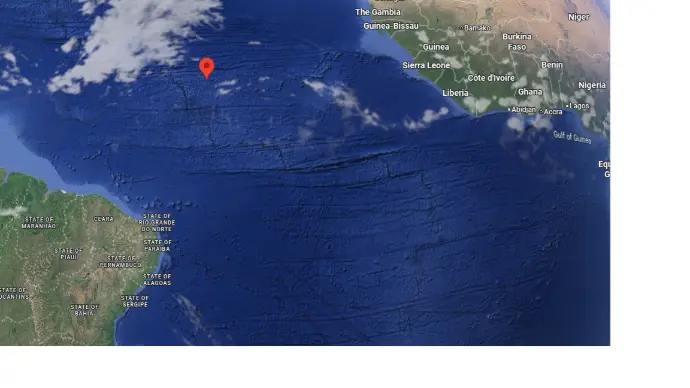
We are now about 300 miles off South America - if you get the atlas you can find out exactly where we are.
Wednesday 30th March 1864
Spoke a ship but she would not answer.
Thursday 31st
Heavy squalls.
Friday 1st April 1864
Mr Woodcock's dogs tore my shark's fin all to pieces last night; they got it out of the boat where it was hung to dry. Hided them both.
Saturday 2nd April 1864
Now off Trinidad -
Sunday 3rd April 1864 Expect to have one or two more Sundays on board - getting dreadfully tired of the voyage.
So far of the journal came unexpectedly by a Prussian ship
Monday 4th April 1864
You will no doubt be surprised at receiving part of my journal without my putting in anything else, but we have just spoken a ship, and the captain lowered a boat to speak to her. I had only just time to put the journal into the envelope and direct it and even then was nearly too late, as the boat had to start directly it was into the water to catch her. She was a Prussian from Janeiro to London and was anxious to know about the war, so perhaps my journal may be captured and you not get it after all.
.
Prussian war
In 1864, Prussia was involved in the Second Schleswig War. This conflict began on February 1, 1864, and lasted until October 30, 1864. Prussia, in alliance with Austria, fought against Denmark over the duchies of Schleswig and Holstein. > > The war ended with a Prussian-Austrian victory, resulting in the Treaty of Vienna, which granted control of the duchies to Prussia and Austria. This war was significant as it set the stage for future conflicts that ultimately led to the unification of Germany.
Mail etiquette
In 1860, maritime mail delivery followed specific etiquette and protocols to ensure the safe and timely transport of correspondence. Ships, particularly those operating on established trade routes or mail lines, adhered to these conventions:
1 . Designated Mail Ships: Certain vessels were designated as mail ships or packet boats. These ships were specifically outfitted and scheduled for transporting mail, often receiving priority in ports.
2. Sealing and Marking: Mail was often sealed and marked clearly with the sender's and recipient's details. This helped in the sorting and delivery process upon arrival.
3. Official Handling: Crew members designated for handling mail were typically trained in the importance of safeguarding these items. They ensured that mail was kept separate from cargo.
4. Regular Schedules: Ships followed regular sailing schedules, which were published widely. This allowed senders and recipients to anticipate when mail would be delivered. 5. Protocols in Harbors: Upon arrival at a port, mail was generally turned over to the local postal authority or an appointed mail agent, who was responsible for distribution.
6. International Rules: For international mail, vessels were expected to follow bilateral agreements between countries, which often dictated handling practices.
- Navigational Communication: If delays occurred, ships would communicate their status via signals or flags, ensuring that both sender and expected recipients stayed informed.
- These protocols, while evolving, aimed to maintain efficiency and reliability in the mail delivery process across the seas during that era.
.