Sidney's Letters 01
The voyage begins
Sunday March 6 1864.
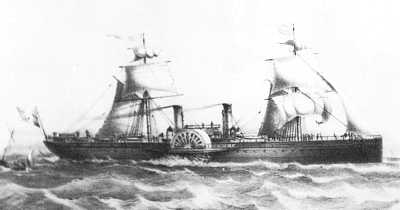
Aboard S.V. "L" Imperatrice Eugene.
I have not been well enough before to begin my journal, the sea has been so very rough and two days ago we had a sharp storm. The sea broke quite over the ship and washed the pig-styes away, etc. It is now quite a calm, about 10 o'clock, we have just finished breakfast, and you are, I suppose getting ready to go to chapel
Out of The Channel
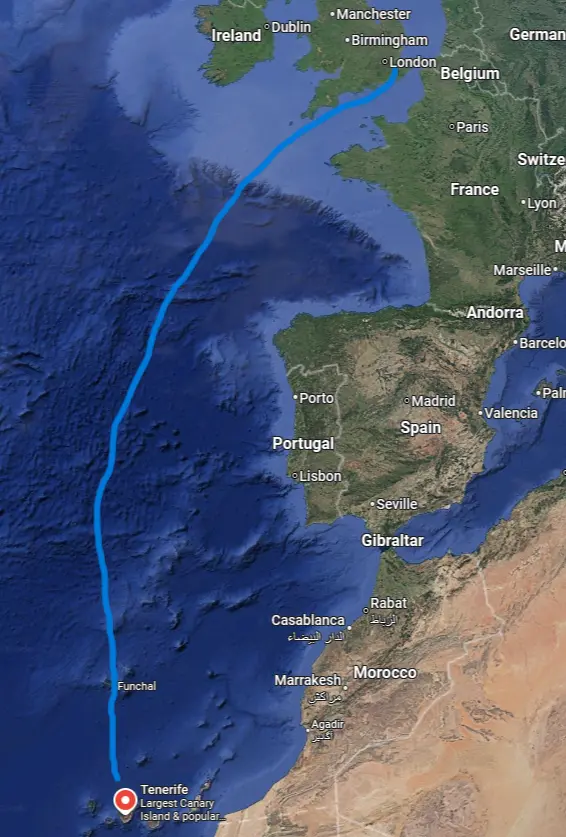
We have till within the last three days had a splendid run, got out of the Channel in two days, and in a week were in the latitude of Madeira. The captain says he has never had such a run before, but for four days had foul winds, so that we are only a little south of Madeira. I would give anything to have Jessie here. The climate is the most beautiful you can possibly imagine. We are all lying about on deck in the shade, the sun is so hot. I think it would be impossible for anyone that is weak, though, to stand sea-sickness. I had no sooner given my letter to the pilot than I was taken and for seven days could take nothing but two biscuits and had a little brandy. The thirst I endured was so dreadful that I would have given every penny for an orange or an apple or some sort of preserve. One night I drank four pints of water and would have taken four more if I could have got it; it is the most dreadful disease I ever had and when I looked at myself in the glass. I should not have known who I was, and have most certainly have been a stone lighter than when I started: but am enjoying it now and no mistake . There is just enough swell to make it hard writing, but I am lying down on deck which is not a good position for writing.
Mr Woodcock is a very pleasant companion, he tells me all about sugar and coffee planting: he has a large plantation out there. He has been very kind in getting me what I wanted when ill, but I will not write any more today or I shall use all my paper.

Teneriffe
Monday 7th
Saw a schooner but did not speak to her. Amused ourselves by playing quoits.
Tuesday 8th
Read book and played quoits. Lat 30N Head winds still, quite recovered from all sickness now. 10pm writing this in my cabin. Very rough.
Wednesday 9th
We are now passing the Salvages, large rocks, islands in fact and are just able to see Teneriffe which is exactly 90 miles distant from us a long way to see anything. We can only see the peak. The captain pointed it out to me just now, it looks like a white cloud. Have just passed a turtle asleep, also a Nautilus in full sail.
Thursday 10th
~~~~~~~~~~~~~
Saw Teneriffe in the distance this morning (we are about 5 miles from the island of Palmas, one of the Canaries) and it is the most beautful sight I ever saw. The top of the mountain is covered with snow (the last I will see very likely for a long time) - clouds hang halfway down the mountain, orange groves and vineyards are at the foot, but the top of the mountain appears above the clouds.
Friday 11th April 1864
We are well into the N.E. trades, and are doing about 10 knots and hour. This evening had a dance on the deck. Mate plays the fiddle; we have also games on deck by moonlight; getting very hot, evening the only cool part of the day.
Sat. 12th.
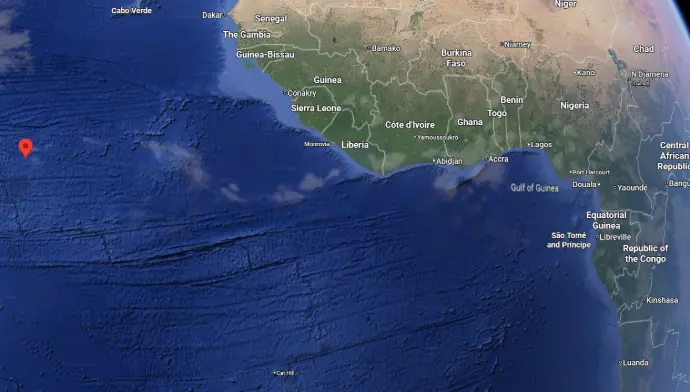
Splendid fair wind, still going 10 knots. Spoke the Consul of Bristol 27 days out. She had just had her foreyeard carried away by a squall we had not felt, although at the time she was not more than 40 miles from us - Juno is alright.
Sunday 13th
Another splendid day. We are well in the trades and are just entering the tropics. Sun bery hot - we have an awning rigged up on the quarterdeck and I am now lying under it on my mattress. Juno is lying at one end and myself on the other.
Monday 14th
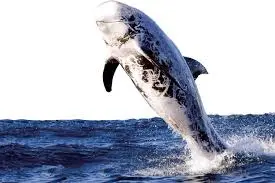
Saw a shoal of Grampusses this morning. They are like small whales
[The term "Grampuss" refers to a type of marine mammal, often identified as the common dolphin, specifically the species Grampus griseus. This creature is also known as the Risso's dolphin.
Risso's dolphins are typically found in deep offshore waters and are noted for their robust bodies and distinct color patterns, which can include grey and white markings. They can grow up to 4 meters (about 13 feet) in length.
These dolphins are social animals, often seen in groups, and they primarily feed on squid and other deep-sea creatures. They are known for their acrobatic behavior and can sometimes be spotted breaching or leaping out of the water.
Risso's dolphins are found in warm temperate and tropical oceans around the world. ]
Lat 20N. Getting very hot.
Tuesday 15th
Sit inthe main-top most of the day and read. Very pleasant up aloft, as it is much cooler than on deck.
Wednesday 16th
Nothing
Thursday 17th
Saw flying fish - had a lot come on board - hung a lanthorn out last night - they came to it like sparrows - caught a lot.
Friday 18th April 1864
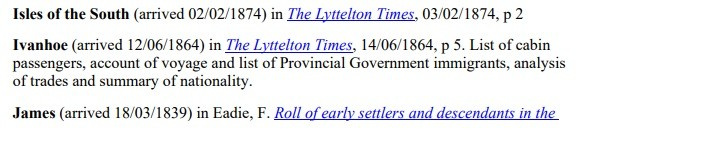
We spoke the Ivanhoe today, bound for Canterbury, New Zealand. Her decks were crowded with emigrants; she left Gravesend two days before we did. We have as yet passed every ship we have sighted which is very satisfactory.
Saturday 19th
We have still fair winds and are broiling in Lat N.27 W.25. Awfully hot - laid out on deck all night in my night shirt. It is nearly a calm and almost find a difficulty breathing - the hottest summer day in England is winter compared to this. Just had a bathe off the dolphin striker - lower myself into the water off the bobstays and pull myself up again and so on; dare not swim because of sharks.
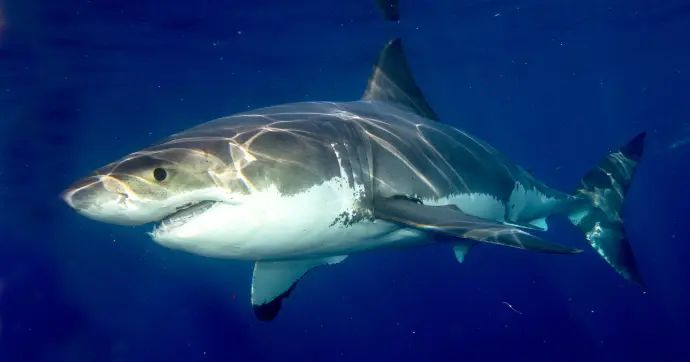
Shark danger
Dolphin striker ~~ A dolphin striker is a component of a ship’s rigging, specifically used in traditional sailing vessels. It is a horizontal strut that helps to stabilize the bowsprit, which is the long pole that extends forward from the ship's bow. > > Typically found on larger sailing ships, the dolphin striker is attached to the dolphin, a short vertical pole or post that rises from the deck. This arrangement prevents excessive movement of the bowsprit in rough seas, enhancing the vessel’s stability and control. > > The term "dolphin striker" comes from its function, as it helps to "strike" or counter the forces acting on the bowsprit when the ship is under sail. Proper maintenance of this rigging is crucial for safe navigation.
Bobstays Bobstays are an important component of a sailing ship's rigging. They are ropes or cables that run from the stem of the ship (the front) to the bottom of the bowsprit, which is the spar that extends forward from the ship's bow. > > The primary function of bobstays is to support the bowsprit and keep it in position. This is crucial, especially when the ship is under sail, as the forces generated by the sails can put significant stress on the rigging. Bobstays prevent the bowsprit from bending or sagging under these loads. > > Bobstays can be made from various materials, including steel wire or synthetic fibers, providing the necessary strength and durability. Properly maintained bobstays are essential for the safety and functionality of the sailing vessel.
Dangerous sharks in the Atlantic In the Atlantic Ocean off the coast of Africa, several shark species can pose a danger to swimmers. The most notable ones include: > > Great White Shark (Carcharodon carcharias) - Known for their size and power, great white sharks can be found off the southern and eastern coasts of Africa. They are responsible for a significant number of unprovoked attacks. > > Tiger Shark (Galeocerdo cuvier) - These sharks are found in warm waters and are known for their unpredictable behavior. Tiger sharks can be spotted in various coastal regions along Africa. > > Bull Shark (Carcharhinus leucas) - Bull sharks are particularly dangerous due to their ability to thrive in both salt and fresh water. They are often found near river mouths along the coast. > > Hammerhead Shark (Sphyrna spp.) - While not as aggressive as other species, certain hammerhead species can be a threat, particularly in areas where they are common. > > Caribbean Reef Shark (Carcharhinus perezi) - Located in the western Atlantic, these sharks are generally not aggressive but can pose risks if provoked.